September was recently my first year at SeatMe, along with my first full year
living in San Francisco. It’s been a great year as a programmer, doing some
awesome things at a startup that I love, and for life in general, moving closer
to many friends in the area. As part of this milestone, I wanted to reflect on
what has been accomplished and things I’ve learned along the way.
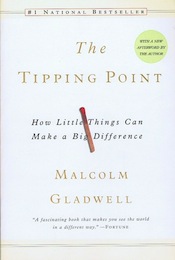
Two for one special today. My reading backlog of late has been oriented on some
well known books covering ideas; how they spread, how they are shared, and how
you can get your ideas to stay in someone’s head. I am always interested in
improving how I can communicate with world around me and these books offer some
great viewpoints on that subject.
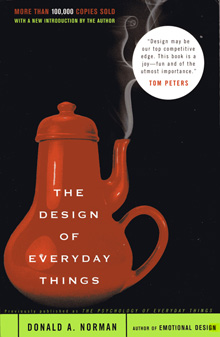
An interesting look at the design of doors, computers, and things that we
interact with daily. The book breaks down the major components of design and how
they work. I learned about affordance, which the quality of something to do
a task; a door handle affords being opened. The book was an interesting mix of
psychology and science, which I’ve studied before with cognitive science. By
better understanding how objects exists and how humans interact with those
objects, you can design better interactions with everything.
Wednesday night I gave a presentation on how I deploy SeatMe.com @ the
Life360 offices in SF. It was pretty fun and had a good turnout! Here’s that
presentation:
One other idea someone had mentioned afterward for running a local PyPI was to
run a Squid proxy in front of PyPI and set a 1 year cache on everything. The
more I think about, it’s pretty ingenious and simple, versus running a full
Python app.
After some recent emails from new users of Journal, I’ve released version 0.3.
(Journal is a CLI tool to help with keeping a work/personal journal).
If you have Journal installed with pip, you can
$ pip install -U journal
What’s New
This version has been a long time coming, pulling in some patches from my friend
Drew and changing how arguments passing to Journal are handled. Here is the
official list:
I’m really looking forward to attending my first PyCon this weekend. After
moving to SF, it’s great to have so many cool conferences right in my backyard!
It’s sold out this year, which might be a first? The talks look great, but I’m
just as hopeful to meet a bunch of cool people and trade ideas on projects and
Python. After writing Python for around 5-6 years now, I’m finally beginning to
understand most things and hopeful to begin contributing to large projects or
things that might help improve the language.
Something I’ve noticed lately with vim plugins are that miniscripts and smaller
vim tweaks, any sort of vim functionality, are being packaged and shared as
a proper vim plugins via git, not just big IDE style plugins. This may not be an
entirely new idea, but I think it’s becoming more of the norm to use pathogen
and git submodules to share everything vim related, rather than copying and
pasting actual code, I think the idea of managing everything via git, github,
and git submodules is pretty neat.
A habit I’ve developed over the last few years is to backup all of my online
artifacts and identities once the year ends. Maybe I’m just a bit paranoid, but
in this day and age with more and more things being stored in the cloud, control
and access to your data is being shifted to faceless servers and scripts that
can disconnect you quite easily with little recourse. Whether it’s a TOS
violation, a change in a company’s policy, or just something else screwy,
it’s not something to worry about daily, but it’s better to be prepared.
I wanted to do some kind of reflection this year, so may as well hop on the
bandwagon.
###What’s the coolest Python application, framework or library you have discovered in 2011?
Fabric. For a good six months of this year, I was managing everything
server-wise at my last job through Fabric and learned a good deal about it,
hacking in some features and giving a presentation on it at the local
Pittsburgh users group. It’s great to be able to automate things and to
have that ability in Python.
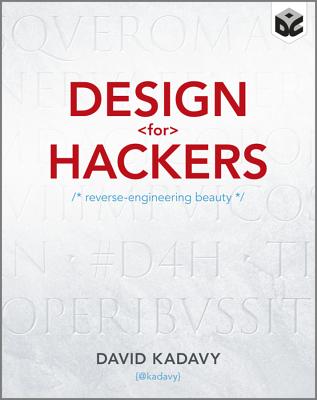
Design, layout, fonts, and color theory for websites and web applications.
Kadavy covers all the main points of design, how design affects how we use
things, and through understanding your design decisions, how you can make better
decisions.
###How Was It?
A useful and interesting read! The hacker in me likes well organized and
straightforward things. Each of the main elements of design were given a chapter
and covered thoroughly: what they are, how they work and why they exist in
a historical context. There were plenty of visual examples that were current and
useful.